ZK
zero knowledge
DIGITALAX.XYZ
Cryptographic Parts
listener.irrevocable.dev

CC0 WEB3
FASHION
Sovereign Compute
Open source hardware matters.
You’re trying to get down to the actual machinery? Not branding language, not “community” talk, not generic decentralization claims. You want to know which cryptographic parts matter, where they sit in the stack, and why they fit the life of an indie designer working directly with garments, tools, buyers, and open materials.
The first cut is simple: the commons and confidentiality are not solved by the same mechanism. Open design materials, open patterns, open outputs in the commons do not need a permission system. They need ordering, signatures, and trace. Confidential interactions do need hard boundaries. They need cryptography that keeps data from ever becoming broadly reachable. Those are different jobs.
So signatures come first. A signature is the basic unit of authorship, sequencing, and provenance without licenses. A designer publishes a pattern, a variation, a finished garment scan, a loom file, a parametric cut rule. They sign it, or they do not. If they sign it, the signature says: this passed through this key at this point in time. That is enough to create a visible lineage. It does not restrict the work. It places it.
Hashes matter for the same reason. A hash pins a specific state of a file, pattern, image, recipe, or machine instruction. That gives exact reference without needing any central archive. A designer can say: this garment was produced from this exact pattern state, this exact material spec, this exact machine program. Again, no license is needed. Just a stable cryptographic anchor.
Then Merkle-style structures matter once there are many files, many variations, many process states. A single garment may involve body blocks, weave plans, graded sizes, simulation outputs, machine instructions, finishing notes, and photos of the final piece. These can be grouped into a structure where any later tampering is visible. That gives a designer a way to publish rich open material while keeping it coherent.
Now move to the confidential side. This is where encryption begins doing a different kind of work.
A buyer’s measurements, address, payment details, private messages, fitting notes, custom requests, and purchase history do not belong in the commons. They should not be treated as “protected records” inside an otherwise public machine. They should exist in a separate domain where only the intended parties can even reach the plaintext.
That means ordinary public key encryption is fundamental. The buyer encrypts their data for the designer, or for a specific service the designer runs. The message is not just hidden from the public. It is structurally unavailable to everyone except the holder of the right key. That is already a major difference from current fashion systems, where almost every buyer interaction is legible to multiple intermediaries.
But encryption alone is not enough once computation enters. If a designer wants to use a fitting model, a recommendation model, or a custom sizing tool, then someone has to compute on that data. If the data is decrypted on a third party server, the boundary has already weakened. This is where confidential computing becomes serious. The point is not just to store encrypted data. The point is to let computation happen while keeping plaintext exposure tightly bounded.
A buyer can prove they purchased a garment without exposing their full identity or full transaction history. They can prove they belong to a holder set for a specific edition or run without revealing which exact address is theirs. They can prove eligibility for a private channel, repair service, future release, or custom commission without handing over a full dossier.
That changes the texture of the buyer relationship. The designer can keep a direct link to real patrons, real collectors, real wearers, while the buyer does not have to leak unnecessary information every time they interact.
A zk proof can also be used around production and sourcing. A workshop could prove that a garment came from a certain certified material batch, or that it was produced within a certain process envelope, without exposing every internal business detail. That matters if a designer works with several local shops and wants strong claims about quality or material origin without forcing every collaborator into total transparency.
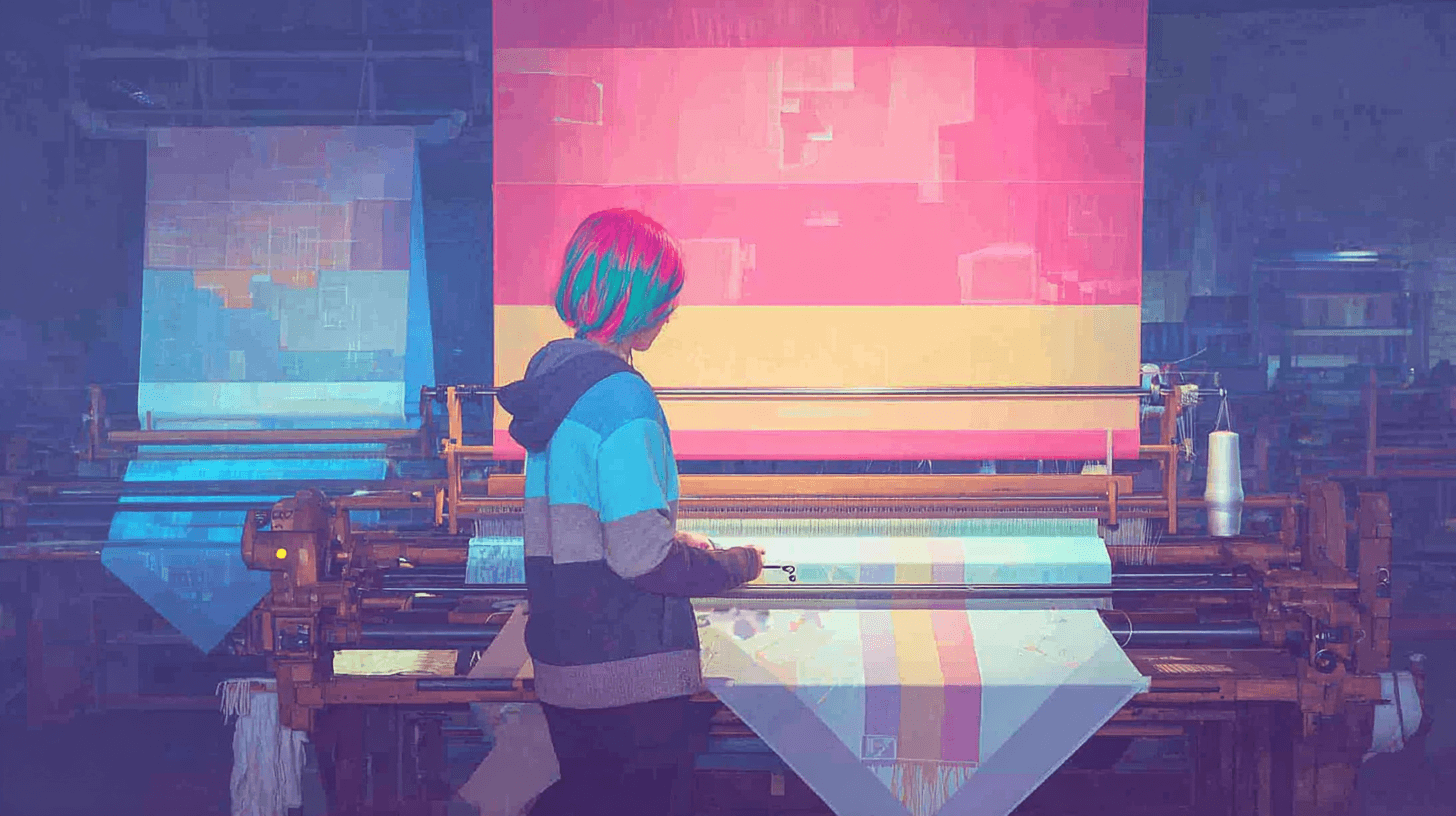
This is where the sovereign side comes in. Sovereignty here is not abstract independence. It means the designer can hold the keys, run the tools, publish the work, receive encrypted buyer data, and produce proofs without needing a central operator to host identity, legitimacy, or access. Their practice is not hanging from someone else’s database.
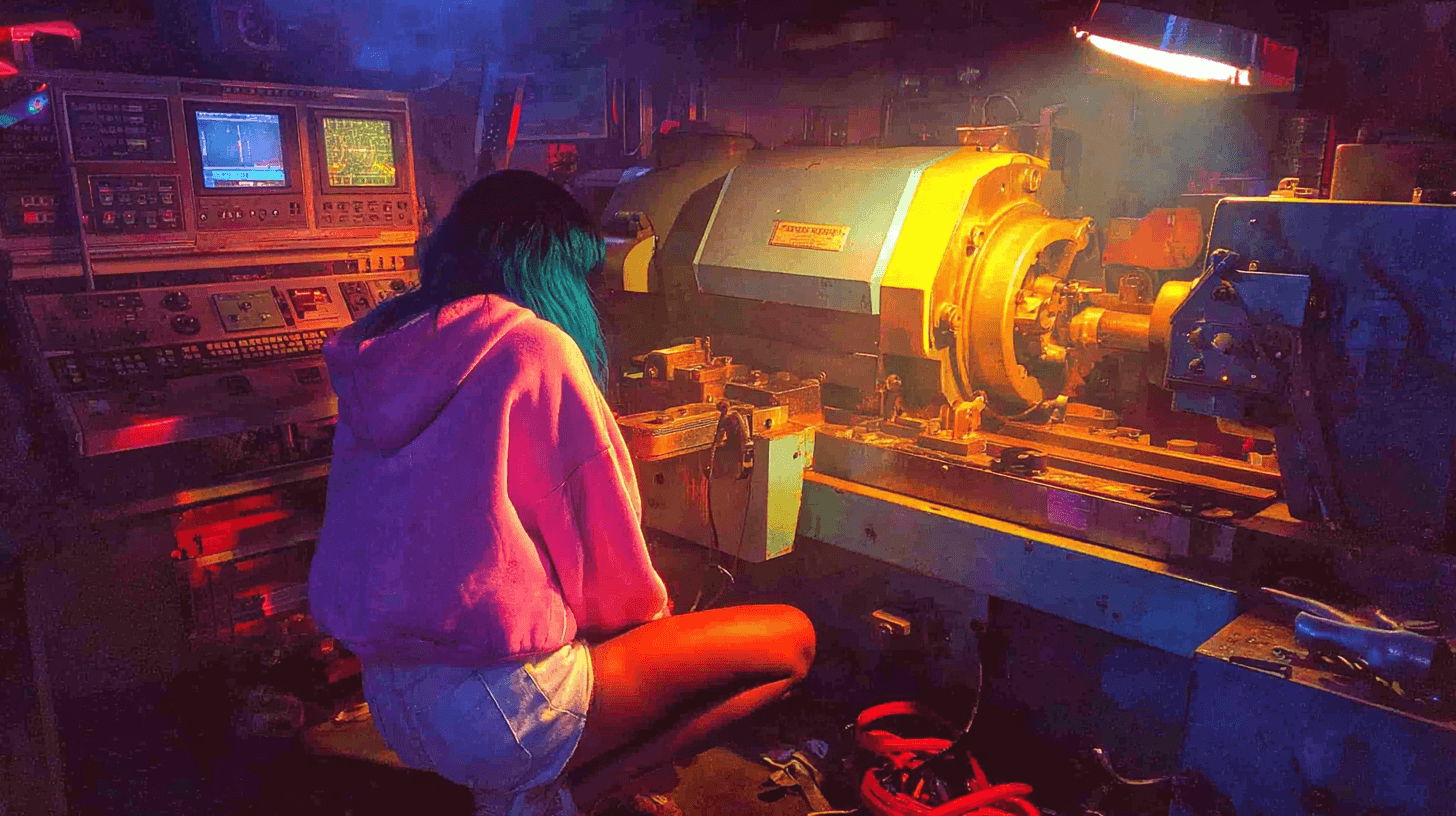
Open source hardware matters because it closes the loop between design sovereignty and machine sovereignty. If the designer relies on black-box machines, closed firmware, closed cloud software, and remote APIs to cut, weave, simulate, or fit garments, then their process is only superficially independent. The real power sits somewhere else. Open hardware gives them the ability to inspect, modify, repair, and coordinate their tools directly.

That matters more in fashion than people often admit. A loom, a cutter, a knitting machine, a scanner, a camera rig, a local inference box, a fabrication controller: these are not just peripherals. They are the actual means by which form becomes material. If those means are closed, rented, or remotely governed, then the designer’s independence is partial at best.

Once the designer works with open hardware and local compute, cryptography stops being an abstract financial layer and becomes part of the design process itself. They can publish open patterns from one machine, sign them locally, fabricate from those patterns on another machine, encrypt private buyer interactions on a third, and use proofs to manage access and continuity across all of it. The stack becomes coherent.